












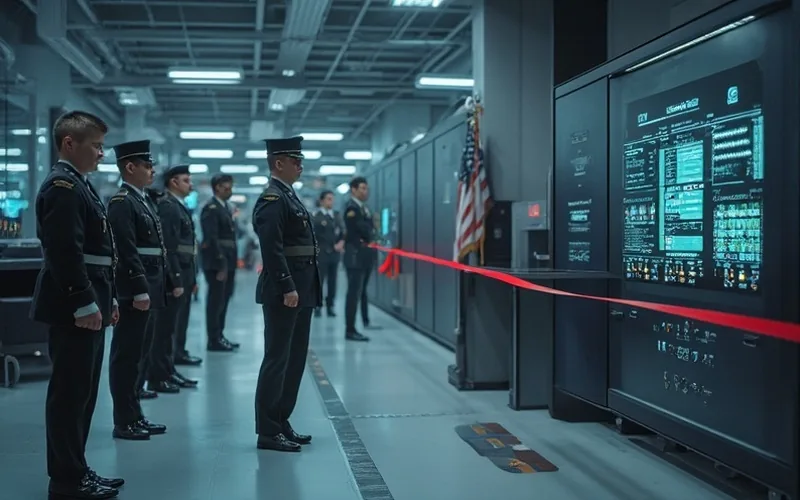
As the nation advances toward the next era of military innovation, the U.S. Army is paying tribute to a distinguished war hero by naming a new state-of-the-art supercomputer in his honor.
The late Col. Thomas J. Everett, a native of Brookfield, Alabama, served valiantly in World War II, the Korean War, and Vietnam. In recognition of his service and sacrifice, a ribbon-cutting ceremony was held this week to dedicate a high-performance computing system that now bears his name.
At the ceremony, Col. Everett’s daughter, Susan Everett, reflected on what the dedication would have meant to her father. “He would have been humbled by this,” she said. “He would have appreciated the impact this computer will have for the Department of Defense and the nation, but he would have insisted the honor is not about him, but about serving the country.”
The newly commissioned supercomputer will be instrumental for the U.S. Army Corps of Engineers, enabling advanced research and simulations across a spectrum of military applications.
Dr. Michael Carter, director of the Army’s Advanced Research Center in Oakridge, Tennessee, explained, “We’ll be able to run simulations on everything from aerodynamics and hydrodynamics to weather modeling and molecular dynamics. This system gives researchers across the department the computational power to explore and better understand complex scenarios critical to national defense.”
The U.S. military operates a fleet of supercomputers, which are integral to the work of military engineers and scientists. These machines support the development of cutting-edge military technology and next-generation weapon systems.
“These systems are essential for our research teams,” Carter said. “They play a vital role in the design of new weaponry and defensive measures that are ultimately deployed by our men and women in the field. The innovations developed here directly contribute to the safety of our troops and maintain our technological edge.”
As the Army continues to face evolving technological challenges, supercomputers like the one named for Col. Everett will remain at the forefront, enabling the defense community to solve complex problems and maintain readiness for years to come.


