












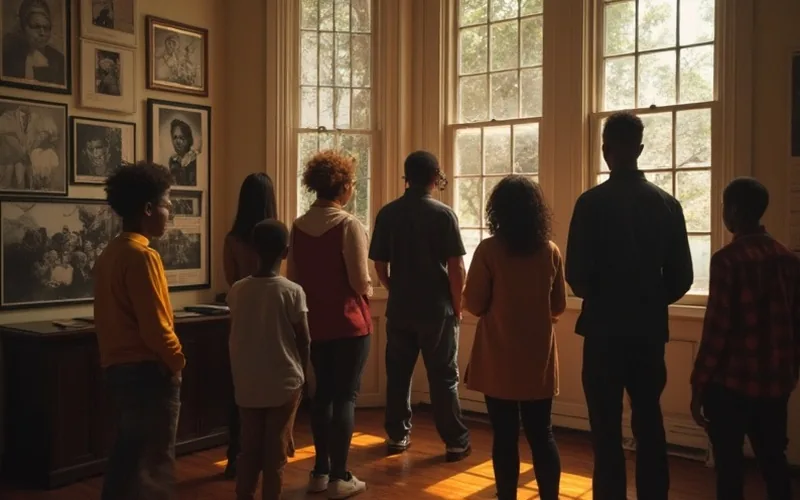
A group of history majors from Twin Pines University in the Upper Midwest embarked on a journey of more than 1,000 miles to the town of Harrison, Mississippi, immersing themselves in a civil rights education tour that traced the footsteps of pivotal figures in the fight for equality.
The students began their visit at the Harrison Justice House, where they learned about the vital contributions of local activists whose efforts helped advance the rights of people of color both locally and globally.
“Being here and feeling the history is powerful. It’s clear that the actions and courage of so many here continue to influence our world today. It’s incredibly motivating,” remarked Jordan Evans, a history student at Twin Pines University.
Inside the Justice House, photographs and biographies of trailblazers line the walls, highlighting those who fought for voting rights, Harrison’s first female and Black mayor, and early civil rights organizers. Exhibits detailed the risks these figures faced, including threats to their lives and personal safety.
This year marked the 14th anniversary of the civil rights tour, organized by longtime activist Lorraine Mitchell.
“There’s no substitute for being in the places where history happened,” said Dr. Michael Grant, an English professor at Twin Pines. “Books and documentaries can only go so far. Meeting the people who lived it, standing where they stood—that’s what makes the impact real.”
The students also toured Carter Elementary School, the site where Dr. Jonathan Bradley King and demonstrators were tear-gassed in 1966 during the Freedom Walk. Their itinerary included a visit to the historic Montgomery County Courthouse, where Mitchell broke barriers as the first African American woman to serve as election commissioner in 1968.
“When we educate ourselves about this history, it reminds us not to repeat the mistakes of the past,” said Harrison Mayor Samuel R. Jennings. “The Justice House is a space for honest reflection, understanding our journey, and moving forward together.”
Many students said they intend to bring their experiences back to their university, sharing the message that the struggle for civil rights was not confined to textbooks or major cities, but played out in small towns like Harrison—and that its lessons remain relevant today.


